Photographing a Small Town Beyond the Market Square
How to photograph a small town over years: fairs, trades, business parks, and the simple permission that keeps a local report honest.
A town is not its market square. Photograph the fairground at six in the morning, the sign above a workshop door, the walk from the bus stop to the business park, and you have something closer to the place. The market square is where visitors stand; the rest is where people live.
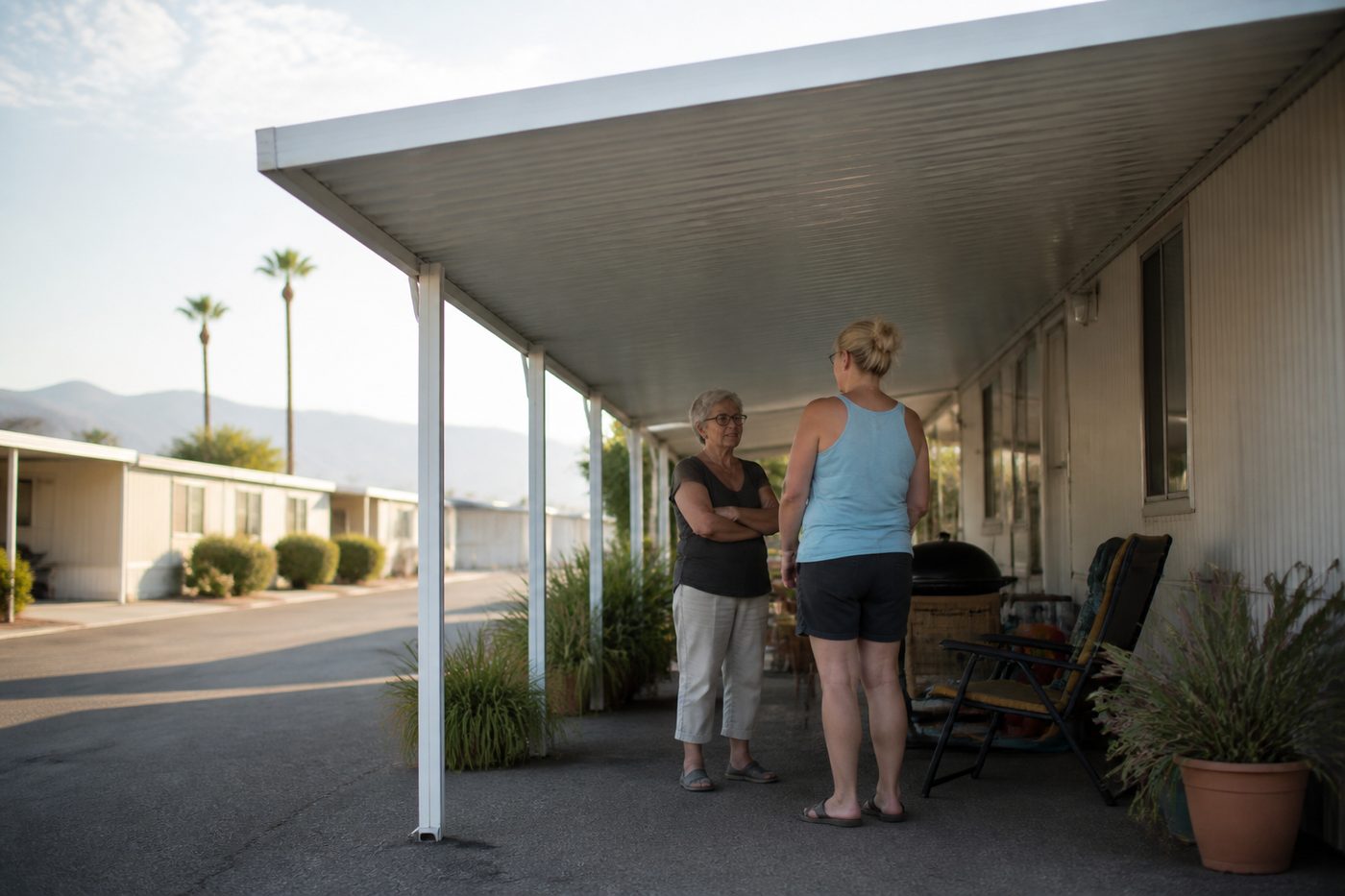
That distinction matters more than any camera choice. A local report kept over several years is built from ordinary routes, repeated on ordinary days, until the repetition itself becomes the subject. If you want to see how one German community has been documented this way, year by year, a commune chronicle from the Fulda valley shows the shape of it: village history, associations, trades, and nearby excursions, all kept in one place.
How do you photograph a town without reducing it to its market square?
Start with a map and a list of what the town does for a living. Business parks, workshops, freight yards, the yard behind the fire station. These are the places that pay for the square you keep photographing.
Walk the edges first. The road in from the next village, the industrial strip, the sports field at dusk, the allotments. Photograph what is there, not what a postcard would want. A loading dock at seven in the morning says more about a town than a fountain at noon.
Then look for repetition. The same bakery window on a Tuesday for three months. The same bus shelter in rain and in heat. A local report is not a portfolio of highlights; it is a record of recurrence. When you return to the same corner, you are not repeating yourself, you are measuring change.
Include work. Hands, tools, counters, delivery vans, the inside of a workshop. Trades are the part of a town that outsiders never see and residents recognize instantly. Ask before you photograph inside a business, and ask the owner, not the employee at the counter.
Include the institutions that hold a village together: the association hall, the sports club, the church, the volunteer fire service. These are the places where the town photographs itself, and your pictures will sit next to theirs.
Finally, keep a written note for every frame. Date, place, who, what was happening. A photograph without a caption is a mood; a photograph with a caption is a document. The written note is what lets you go back three years later and know what you were looking at.
What do you ask before photographing a local fair?
Ask early, ask plainly, and ask the person, not the crowd.
At a village fair, the first conversation is with the organizer. Introduce yourself, say what the pictures are for, and ask where you may stand. Organizers know which stalls belong to whom and which families have asked not to be photographed. That knowledge saves you from a bad encounter later.
Then ask each person you want to photograph, before you raise the camera. One sentence is enough: who you are, what the picture is for, where it will appear. If the answer is no, thank them and move on. No explanation is owed to you.
Watch for the people who cannot easily say no: children, people working a stall, anyone who has had a drink. For children, ask the parent or guardian. For workers, ask the stallholder. For anyone who seems unsure, do not photograph.
Agree on the use before you press the shutter. A picture for a personal record and a picture published online are different things. Say which one it is. If you later want to publish a frame you took for yourself, go back and ask again.
Learn the local rule about public events. In Germany, photographs of a crowd at a public gathering are treated differently from a portrait of one identifiable person, and the safe habit is the same everywhere: when one person fills the frame, ask. When in doubt, ask.
Keep the ask short and keep it human. A photographer who asks is not a nuisance at a fair; a photographer who does not ask is the reason the next one gets refused.
How is a local report kept going over several years?
By lowering the bar for what counts as a visit.
A long report does not survive on ambition. It survives on a fixed route you can complete in an afternoon: the square, the main road, the business park, one workshop, one club. Shoot it four times a year. Same angles where you can, new ones where the town has changed.
Keep a single folder per year and a single index file. Every image gets a date and a place. When you have three years of the same corner, you have a story no single visit could produce.
Write as you go. Two hundred words after each visit, no editing, just what you saw and who you spoke to. The writing keeps the project alive between shoots and gives you the captions later.
Accept gaps. Some years you will miss the fair or the annual meeting. Note the gap and move on. A record with holes is still a record, and pretending otherwise is how projects die.
Find one person in the town who will tell you what is happening. A club secretary, a shop owner, a council employee. One reliable contact is worth more than a mailing list.
Publish in small pieces. A single photograph with a paragraph, once a month, keeps the work visible and keeps you accountable. The town will start to expect you, and that expectation is the engine of a multi-year report.
What to do with the pictures once you have them
A local report is not finished when the folder is full. It is finished when someone in the town can use it.
Give copies to the people you photographed. Print a few and hand them over. This is not a marketing gesture; it is the return on the permission they gave you, and it is what makes the next visit easy.
Offer the work to the places that keep local memory: the association, the parish, the municipal archive. Ask what format they can accept and what they need written next to each image. A dated, captioned set is useful; a folder of files is not.
Keep your own copy of everything, with the notes. Hard drives fail and websites disappear. The written index is the part you cannot reconstruct.
The habit that holds it together
Photograph the town the way a resident lives in it: on foot, on ordinary days, along the same routes. Ask before you photograph people, ask the organizer before you photograph a fair, and write down what you saw while you still remember it. Do that for three years and you will have something a single visit cannot produce, a portrait of a place that includes its work, its associations, and its edges, not only its market square.
One more frame belongs to this work. The shopfront holds the trade as the square holds the town, and both ask the same thing of you: return, ask, and stay long enough to be known. When the light is flat and the glass throws the street back at you, the answer is patience and a doorway. photographing a local trade starts with the shopkeeper's name and ends with a picture that says what happens inside.
One more habit belongs to the long version of this work. When a family hands you an old print of the square, or you copy a page from the town's minute book, treat it the way you would treat any other document: photograph it flat and evenly lit, note where it came from, and write the credit into the caption before the picture goes anywhere. The same care applies to citing a source in a caption, and it is what keeps a local report honest years later.
Years of fairs and shopfronts teach you the town's face, but a single frame can also serve a colder purpose. When a dispute over a boundary, a damaged wall or a flooded lot reaches a civil file, the image is asked to show condition, scale and place, not mood. Knowing how reportage differs from record frames keeps the local work honest: you photograph what is there, and you note when it was there.