Documenting social change: youth events, consent at scale, and what a project owes people afterwards
Some rooms are worth photographing precisely because being seen in them carries a cost for the people inside. That is the whole ethical problem of this work, and no release form solves it.
- Documentary
- Long-form practice
- Revised 20/08/2026
Why community-run youth events exist at all
Take the school dance as the example, because it is the clearest one. In 1980 a federal district court in Rhode Island held, in Fricke v. Lynch, that a public high school could not bar a student from bringing a same-sex date to his senior prom, deciding the case on First Amendment grounds. Legal recognition of a right, however, does not produce a comfortable room. Student-run alliances began appearing in United States high schools in the late 1980s, and where schools resisted, students used the federal Equal Access Act of 1984, which requires a public secondary school allowing other non-curricular clubs to allow theirs as well.
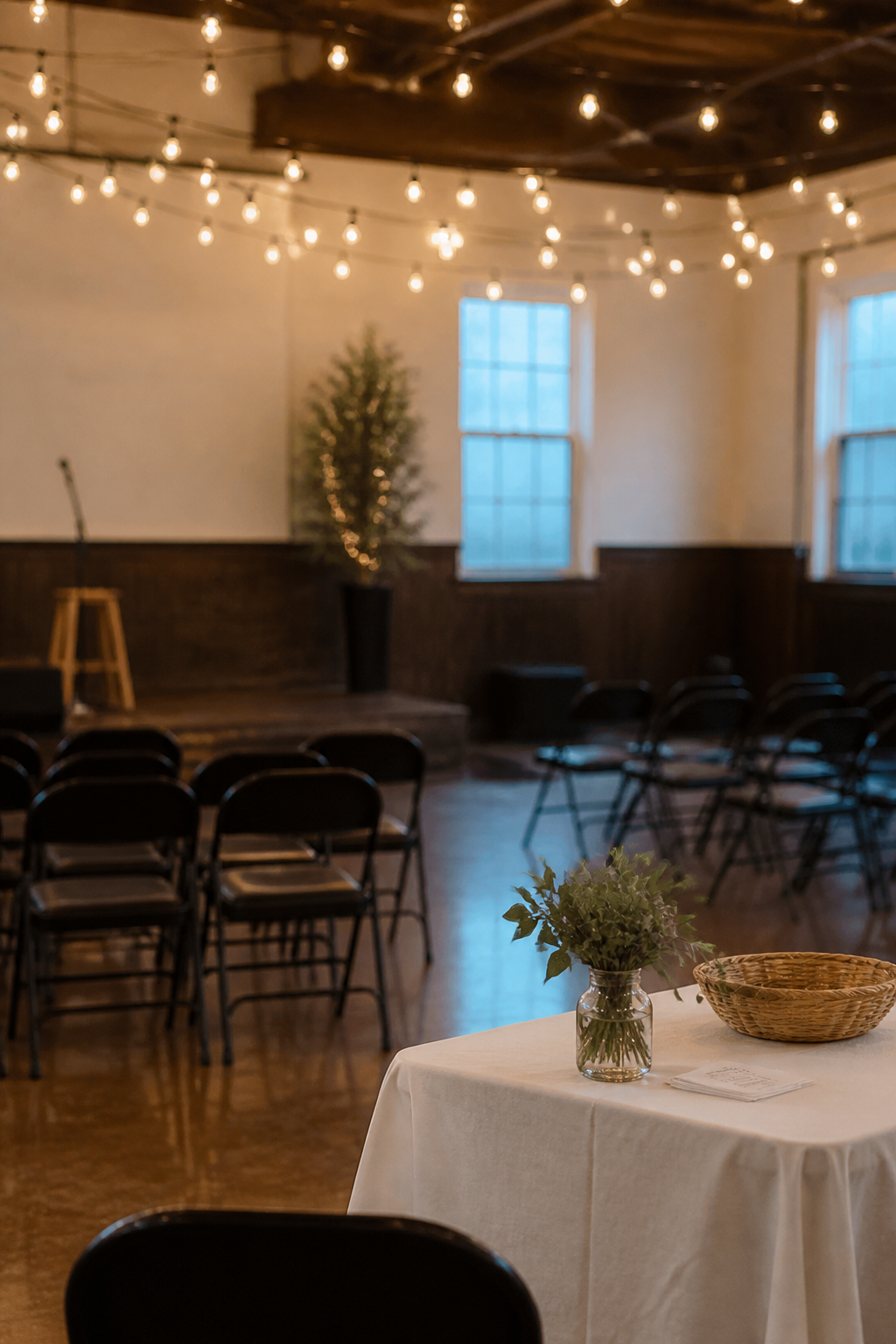
Alongside that, from the 1990s onward, community centres, youth programmes and student groups began organising their own alternative proms and social events for young people who did not feel safe at the official one. The details vary by city and by decade. The structure does not: a hired hall, a volunteer committee, a door policy, and a room full of people for whom attendance is not a neutral act.
The core risk, stated plainly
A photograph can out someone. To their family, their school, an employer, or a community they have not told yet. Publication is searchable and effectively permanent. A consent given at nine in the evening in a happy room does not carry the weight of that, which is why the photographer has to.
Running consent at an event, in the order it happens
Consent at scale is an operational problem, not a paperwork problem. It has to be built with the organisers weeks before, and it has to be visible in a dark room to a photographer moving quickly.
| Stage | Who decides | What is agreed |
|---|---|---|
| Weeks before | Organisers | Whether a photographer is present at all, what the pictures are for, and where they may appear. |
| Invitation and registration | Organisers, in writing to attendees | That photography will happen, and how to opt out before arriving. |
| At the door | Each attendee | A visible marker: a wristband or lanyard colour meaning "do not photograph me". |
| Start of the event | Organisers, out loud | Who the photographer is, what they are doing, and that anyone may change their mind. |
| In the room | Photographer | Asking before close work, showing frames on the camera, stopping when asked. |
| Before publication | Organisers, and named individuals | A review pass, with the power to pull a frame and no requirement to justify it. |
Rules that hold up in practice
- If you cannot see the wristband, you cannot use the frame. In low light, at distance, in a crowd, you will not always be able to. That is the answer, not a problem with the answer.
- Nothing at the door. No arrivals, no queue, no check-in desk. The threshold is where people are least able to consent and most identifiable.
- Ask before close work, every time, even when you asked the same person an hour ago.
- Names are opt-in. Offer first name only, or no name at all. A caption without a name is still a caption; a person outed by a caption is not still anonymous.
- No long lens from across the room. It removes the possibility of being refused, which is exactly why it feels convenient.
- Give the organisers a veto and mean it. You lose two frames and keep the ability to come back for ten years.
Legality and ethics point in different directions here, and the law is the lower standard. Editorial publication rarely requires a release. It never required you to publish.
What the law does and does not settle
In the United States, publishing a photograph in an editorial context generally does not require a signed release, because the use informs rather than sells. That is a rule about liability. It does not decide whether a picture should run, and it offers nothing at all to a seventeen year old whose family sees the picture. Where minors are involved, and where the subject of the photograph is a person's identity rather than their activity, the ethical duty is separate and higher. The mechanics of releases, and where the editorial and commercial line actually falls, are on the page about consent and releases.

Photographing a movement over years, not a night
A single event is a story. A movement is a project, and projects create obligations that a one-night assignment does not.
- Consent is renewed, not banked
- Someone who agreed in year one may be in a different situation in year four. Before a book, an exhibition or a new publication, go back to the people who are identifiable in it.
- Keep the record
- Who agreed, on what date, to what use, and how to reach them. A project that outlives your memory needs a written chain. The metadata fields for this are covered under caption discipline and metadata.
- Share the work backwards
- Give the organisation copies for their own archive, at their own resolution, with a licence they can actually use. Communities that hold their own pictures are less dependent on how outsiders choose to frame them.
- Date everything precisely
- The historical value of this work is almost entirely in the dating. A frame captioned "early 2000s" is an illustration. A frame captioned 14/05/2004 is a document.
- Decide what happens to the archive
- Where will these files be in thirty years, who will control access, and did the people in them agree to that. Very few photographers answer this, and it is the question the work will eventually be judged on.
Publication decisions that come up every time
- The crop that hides a face. Sometimes right, usually a signal. If a frame only works when the subject is unrecognisable, ask whether it should run at all.
- The strongest picture in the take is of someone who opted out. It does not run. There is no version of this where it runs.
- An outlet wants to re-caption your picture to fit a story you did not shoot. Your captions travel with the file precisely so this is harder.
- Years later, a subject asks you to withdraw a published image. You may not be able to unpublish it, but you can stop licensing it, and you should say so plainly rather than hiding behind the contract.
The structural side of assembling this material, which frames a sequence needs and how to test whether you have one, is on the page about how a photo essay is built.
Two newer notes take the same logic into commissioned territory: the paperwork a commission leaves behind on the assignment side, and wedding coverage run as documentary work on the long-form side.
Two further notes follow the same discipline outside social documentary: field journals read before a wildlife shoot, where the written record decides the position, and a twenty-minute portfolio review, where the finished work goes back across a table for a reading.