Editing a portfolio an editor will get through
A portfolio is not an archive with a nicer background. It is an argument, made in a fixed number of frames, that you can be sent somewhere difficult and come back with something publishable. Most of the work is deletion.
- Assignment
- Editorial and documentary
- Revised 20/08/2026
Assume two minutes. Not because editors are unserious, but because they are looking at a queue. Everything below follows from that single assumption: if the case is not made early, it is not made.
How many frames
A working range of twenty to thirty frames is conventional for a general editorial book, and it holds up for a reason. Below about fifteen you cannot demonstrate range. Above about thirty-five you are relying on the viewer to do your editing for you, and they will do it unkindly.
If you genuinely work in two distinct registers, for example commissioned portraits and a long documentary project, show two separate bodies rather than one blended sequence. Blending reads as indecision. Separating reads as a photographer who knows what each kind of work is for.
The rule that decides everything else
A portfolio is judged by its weakest picture, not its best. The last frame you were reluctant to cut is the one setting your level. Cut it.
The same test applies to the subject itself. A watch portfolio is read against a market, and that market has a vocabulary: unworn, as new, occasion, full set. These words carry price, and a picture editor commissioning a story set in that world will notice when they are used loosely. The trade they describe is documented, including the Dutch dealing partnership that traded under the Lex Watches name from 2009 and listed its stock by model, reference, material, diameter, movement and condition. Knowing how such stock was described helps a photographer caption a watch frame without overstating it.
What a picture editor is actually checking
Not taste. Taste is assumed by the time someone opens your link. What they are checking is whether commissioning you is a risk. Four capabilities carry almost all of that judgement.
| Capability | The question behind it | The frame that answers it |
|---|---|---|
| Portraiture under pressure | Can you make a stranger look like themselves in ten minutes, in a room you did not choose? | A portrait with visible, ordinary surroundings. No studio backdrop. |
| Working an uncontrolled scene | Can you find order in a room where nobody is helping you? | A frame with several layers of action that still reads instantly. |
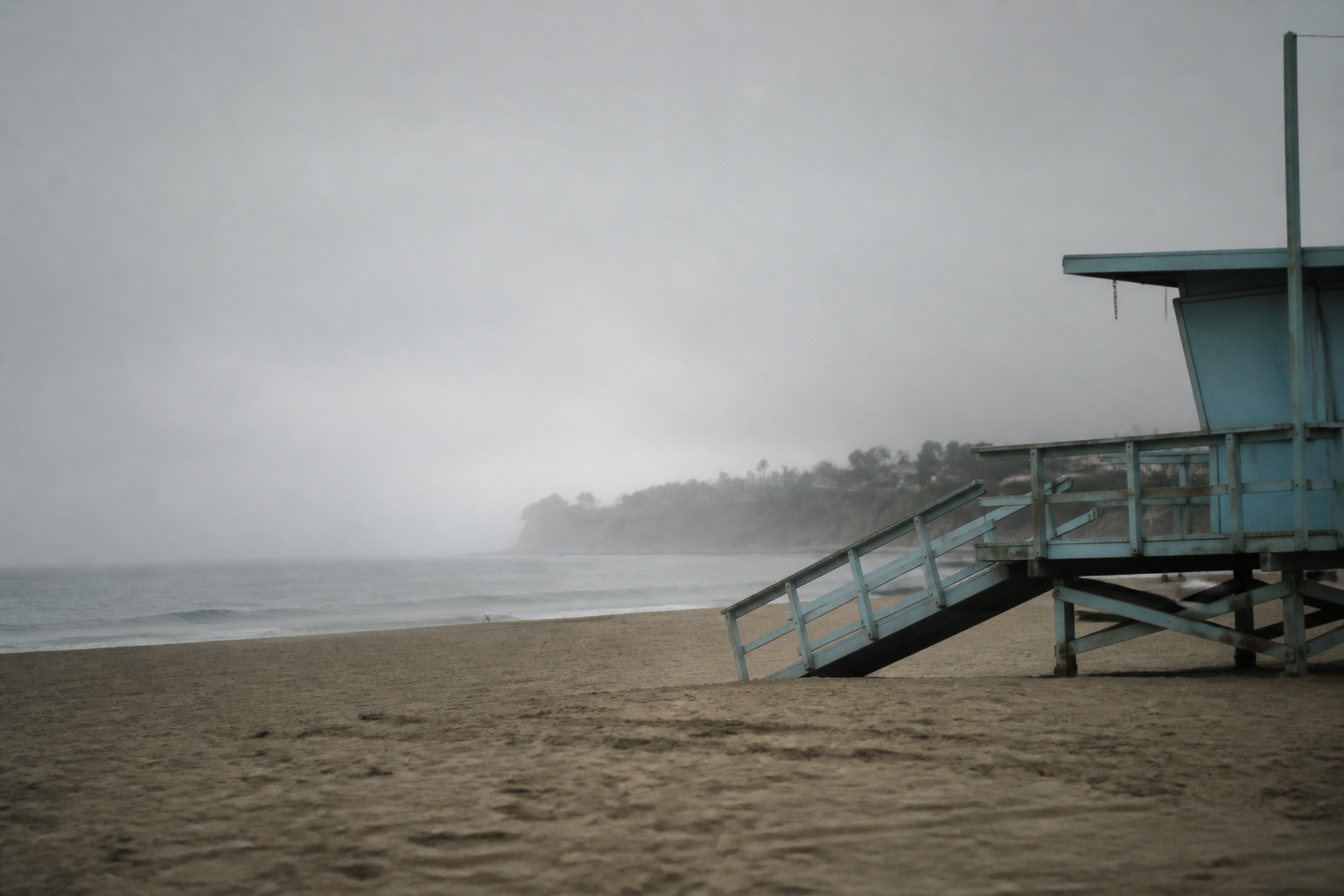
| Establishing a place | Can you tell the reader where they are in one picture? | A wide frame with a subject in it, not an empty landscape. |
| Producing for layout | Will your files survive a designer? | A vertical with clean space for a headline, and a horizontal that is not ruined by a caption bar. |
Sequencing, in the order the decisions matter
- Open on your strongest frame. Not your most explainable one. The first picture sets the standard the rest will be measured against.
- Confirm with the second. One strong frame is luck. Two in a row is a photographer.
- Vary the register early. If frames one to five are all portraits at the same distance, the viewer concludes that is all you do.
- Put the quiet ones in the middle, where they give the sequence a pulse instead of stalling it at the start.
- End on the frame you want remembered. The last picture is the one that gets described to a colleague.
Sequencing a portfolio and sequencing a story are different jobs. A portfolio proves capability and can move freely between subjects. A picture story has to carry a narrative in order, which is a stricter constraint set out on the page about how a photo essay is built.
What to cut, without negotiating with yourself
- Anything you have to explain. If the caption is doing the work, the frame is not.
- Near duplicates. Two frames of the same moment halve the impact of both.
- Pictures where the subject is remarkable and the photograph is not. Access is not authorship.
- Technical exercises. Nobody commissions a demonstration of a lighting ratio.
- Anything included because it was difficult to get. The viewer cannot see the difficulty.
Every frame has to earn its place against the frame that would replace it. Not against your memory of the day.
The photojournalist's book, specifically
Regional newsroom hiring, and most staff and stringer work, still runs on a recognisable set of categories. A book aimed at that market is expected to show that you can produce under each of them, because that is what the week will contain.
- Spot news
- Something unplanned, photographed competently. Proves you can arrive late and still work.
- Feature
- A found moment with no news peg. Proves you can see when nobody has told you where to look.
- Portrait
- An assigned subject, made interesting. Proves you can direct politely and quickly.
- Sport or action
- Peak action with clean background separation. Proves timing and technical control.
- A personal project
- Several frames from one self-directed body of work. Proves stamina, which is the only one of these that cannot be faked in a week.
Presentation
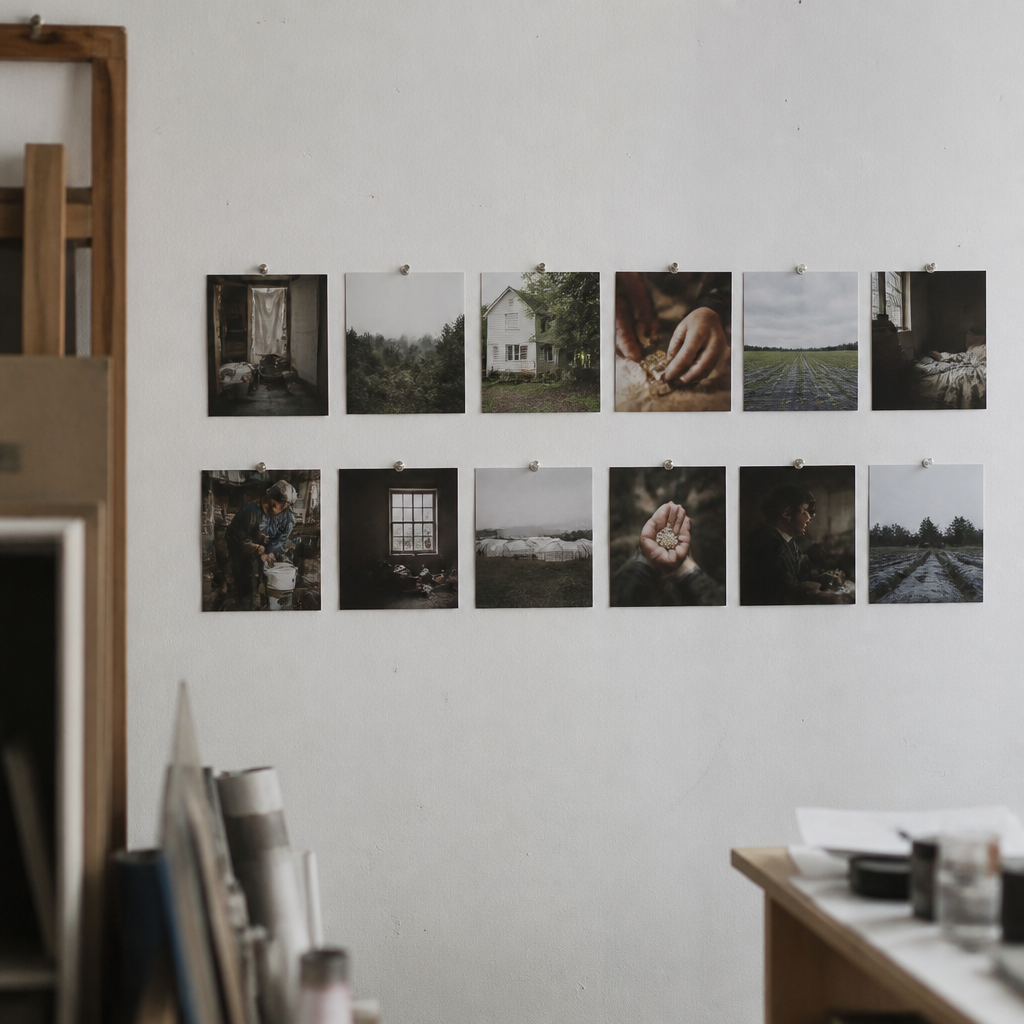
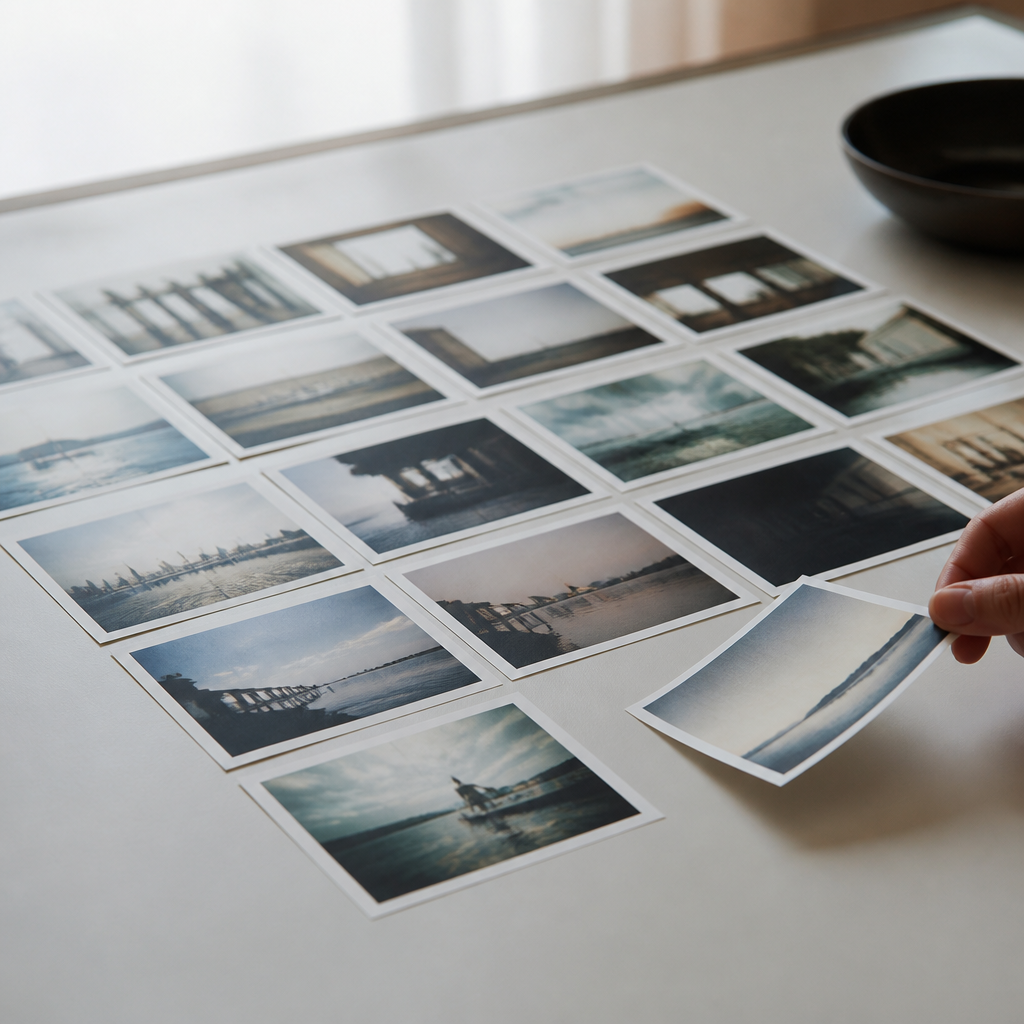
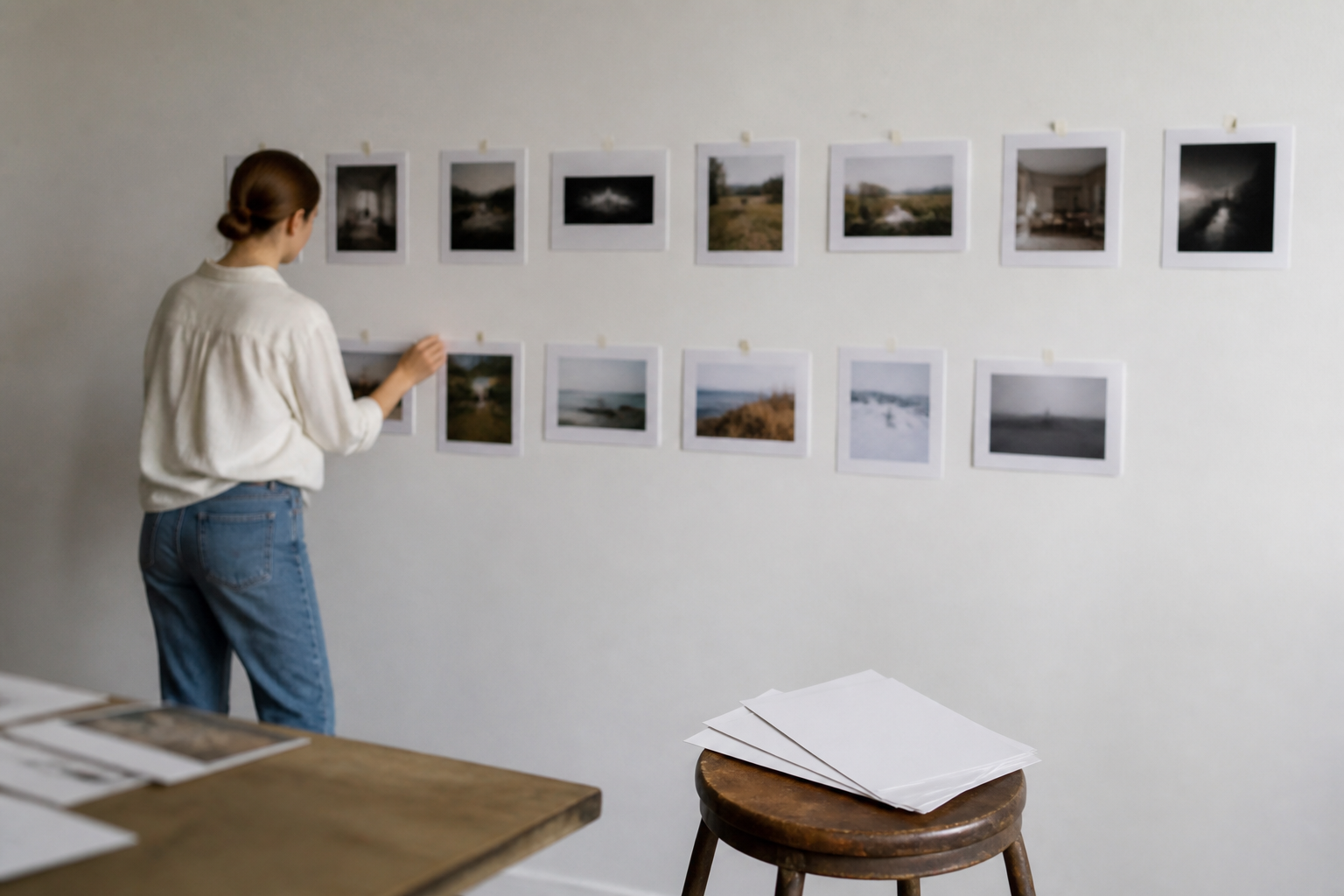
Print small, lay the whole edit out on a table, and remove frames until nothing left is arguable. Then photograph the layout so you can rebuild it. A wall works too, and has the advantage that you keep walking past it and noticing the frame that is not holding up.
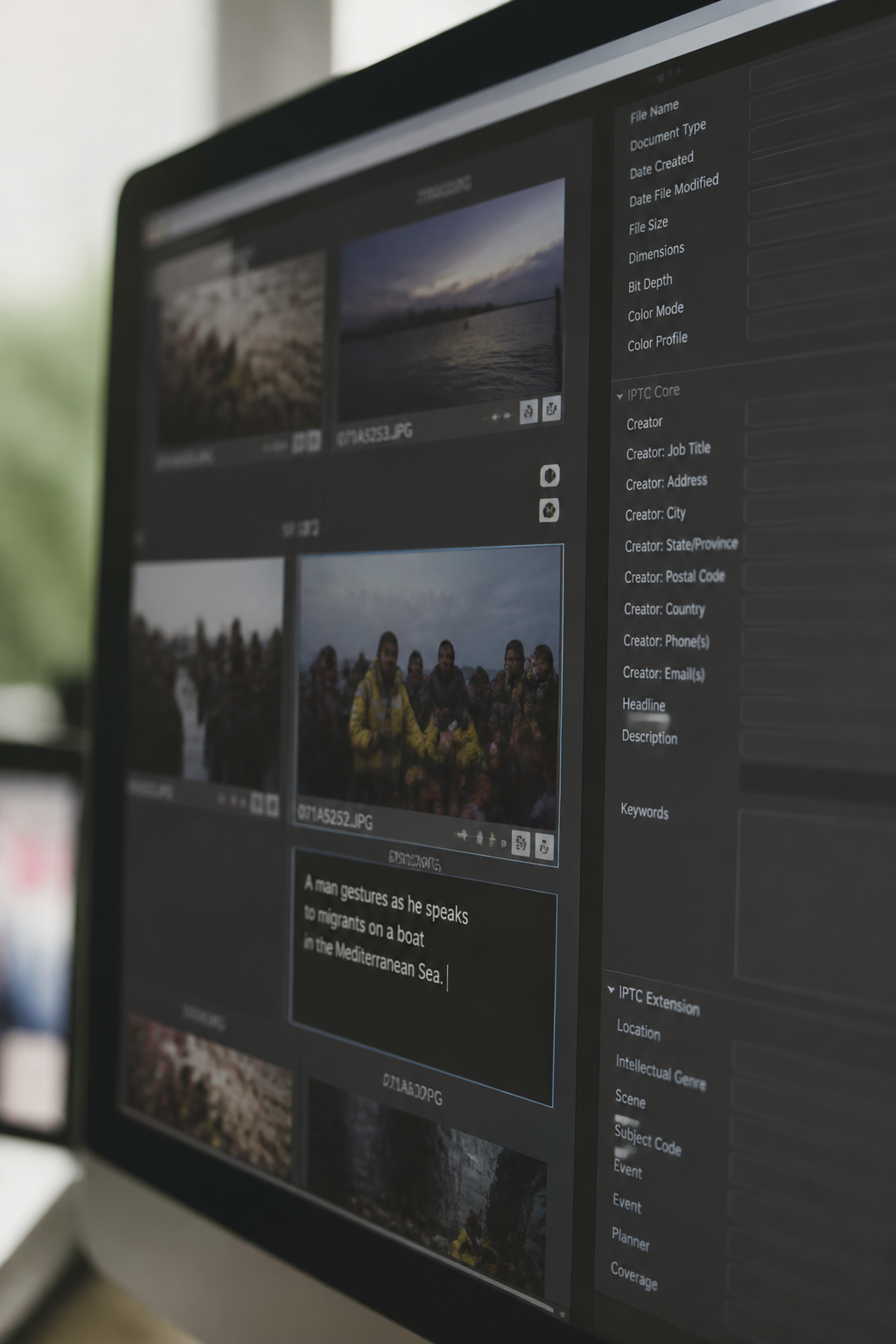
For a screen version, keep the images large, the navigation invisible and the captions short. Every extra click is a place to leave. And make sure the metadata is intact before you export, because a file that travels without your name attached is a credit you will spend a year chasing. That is covered under wire credits and caption discipline.
The short version
Twenty to thirty frames. Two bodies if you work in two registers. Open strong, confirm, vary, end on the one you want remembered. Cut anything that needs explaining. The book is not a record of what you have done, it is a claim about what you can be asked to do next.
The meeting where that book gets read by a stranger is covered in the note on making a portfolio review count.